Photographer: Polina Laamanen
The Helsinki Artists' Association started a new monthly blog in January 2026. Our posts address current societally significant matters concerning fine artists in Finland. We have invited our member artists and staff members as writers.
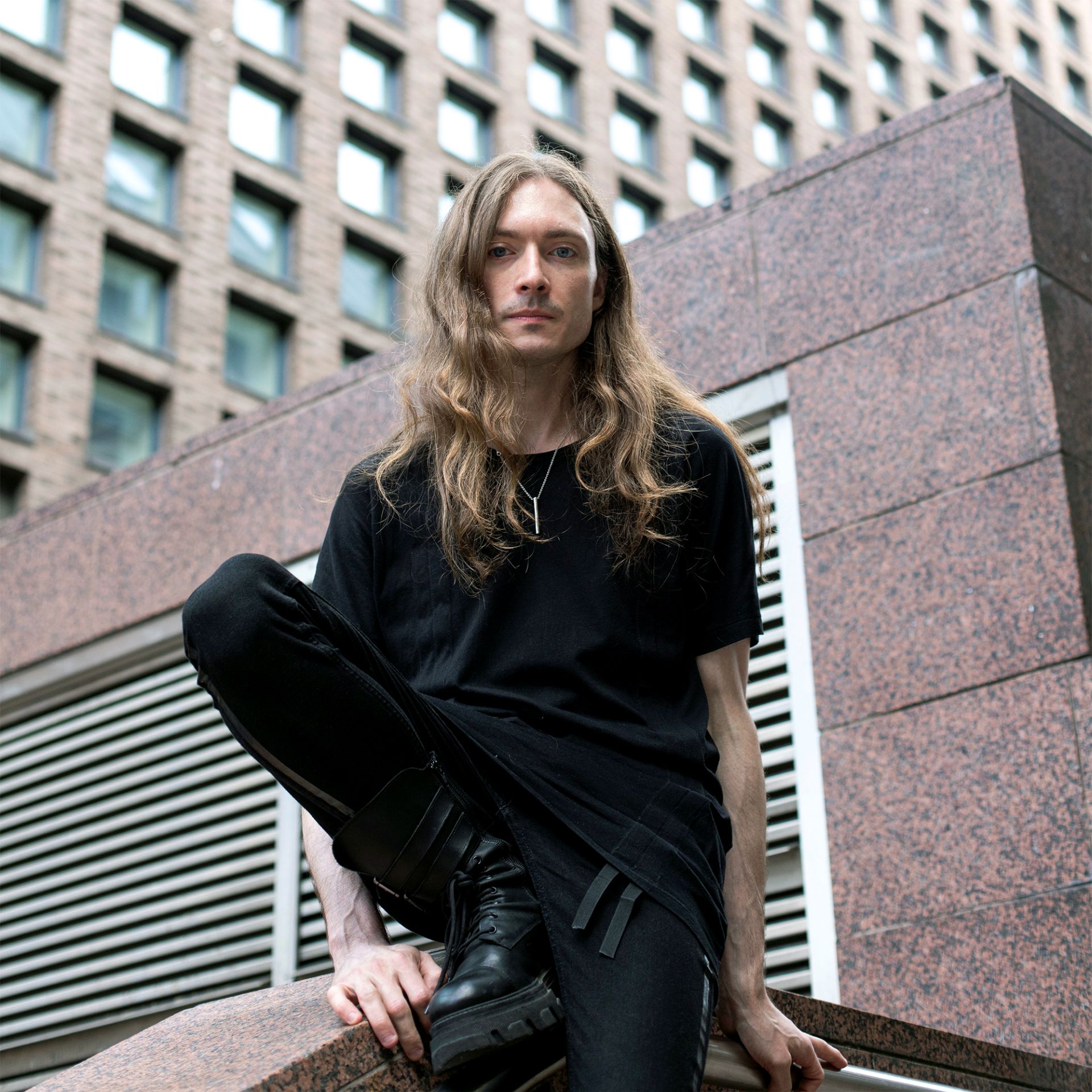
Alex Markwith is a visual artist and member of the Helsinki Artists' Association whose practice merges abstract painting, collage, and digital techniques to explore themes of human and artificial intelligence, consciousness, logical systems, conflict, and power. Currently based in Helsinki, Markwith is originally from the USA and lived in New York for ten years. His blog discusses the increasing challenges of artist's income, social security, and labour market status in Finland.
Last year I visited Dublin for the first time. On the flight, I sat next to an Irish man returning home from a hunting trip in Latvia.
Ireland has been in the news recently for establishing a basic income for artists. The majority of museums are also free to visit. Curious, I asked my seatmate what he thought. Why, compared to other countries, is Ireland so supportive of artists? He replied simply, "I guess we just appreciate talent".
Some months earlier, I overheard a conversation between two viewers at an art opening in Helsinki. "She’s a professional," said one, admiring a painting. "Um," the other corrected, "I don’t think she lives off selling her work."
Based on the data, I would sooner ask whether any measurable percentage of professional artists in Finland in fact does live off of sales.
According to the latest Arts and Culture Barometer, published by Finland’s center for cultural policy research Cupore, 49% of professional artists had incomes below €20,000 in 2023. Only about half of earnings were from artistic work. 85% of respondents had three or more sources of income, and at some point during the year, one third relied on unemployment.
For visual artists, particularly younger ones, incomes are lower than these averages, and labor market status is even more precarious.
The numbers are likely worse at time of writing, considering Finland’s general unemployment rate has risen to nearly 11%, the highest in the EU. Budget cuts have reduced grants, which were already very hard to get, while resulting in fewer paid jobs in a sector where organizations at all levels depend on public funding.
At the same time, exhibition attendance is higher than ever. It seems more people are enjoying art, without always realizing how bad the situation can be for those who create it.
Artists generally make and present their work at their own expense. Once selected through a competitive process, artists may still pay hundreds or thousands of euros to show at a gallery, and are rarely compensated even for exhibitions at major venues. When not supported by a grant, even the most "successful" artists often end up in the unemployment system, where they face yet more challenges.
Because they might at some point have earnings from their creative work, artists can quite broadly be interpreted by officials as "entrepreneurs", and thus denied benefits, even retroactively, and at times regardless of whether there has been any income at all. Authorities can examine websites and social media accounts, and ask questions about when a person created art and how much time was spent.
Even if the matter is ultimately resolved in the artist’s favor, benefits are withheld during an investigation, which can take months. This is a serious problem for someone who is likely already living below the poverty line. Worse still is a negative decision demanding repayment.
Many artists live in constant fear of these cases, and they shouldn’t. The Finnish constitution guarantees both the right to creative expression and the right to social security, but the current system marginalizes artists to the point that the exercise of one right can undermine the other.
As a solution, let’s look to Ireland, where it is estimated that every €1 spent on the basic income program has resulted in a 20-40% benefit to the economy. Government spending is reduced compared to traditional forms of social security, and artists actually end up earning more on their own.
I think it’s past time for Finland to introduce a basic income for artists. Upcoming changes that will further tie benefits to labor market status are exactly the wrong approach. What artists need is a type of social security that is less based on conventional employment, allows us to earn money and doesn’t punish us for trying.

 Seuraa meitä Instagramissa